


In high-performance system design, implementing a caching layer is often prioritized under the premise of reducing latency and offloading the primary database. However, the efficacy of a cache lies not merely in response speed, but in the delicate equilibrium between data freshness and the architectural complexity a system can tolerate. Selecting an inappropriate persistence pattern can lead to critical inconsistencies or inefficient infrastructure resource utilization.
Architectural Deep Dive
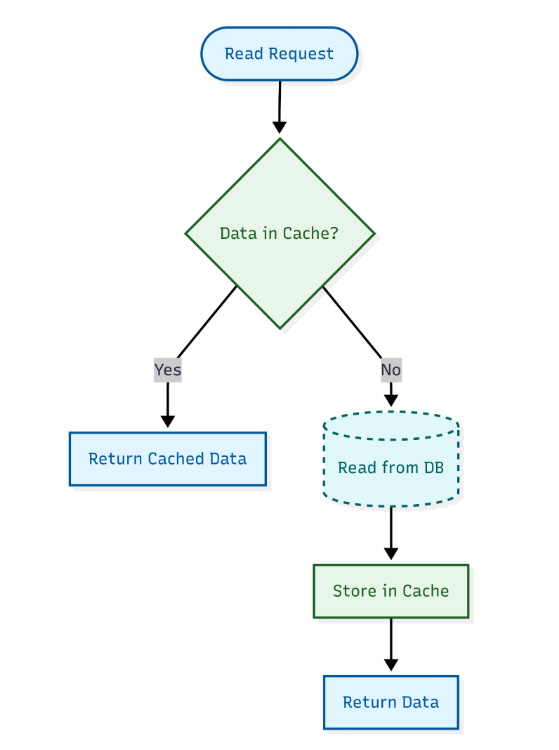
The Cache-Aside pattern is perhaps the most widely adopted strategy due to its reactive nature. In this model, the application assumes full responsibility for orchestrating synchronization between the cache and the database. During a read operation, the system first interrogates the cache; upon a cache miss, it retrieves the information directly from the persistent source and populates the cache for subsequent requests.
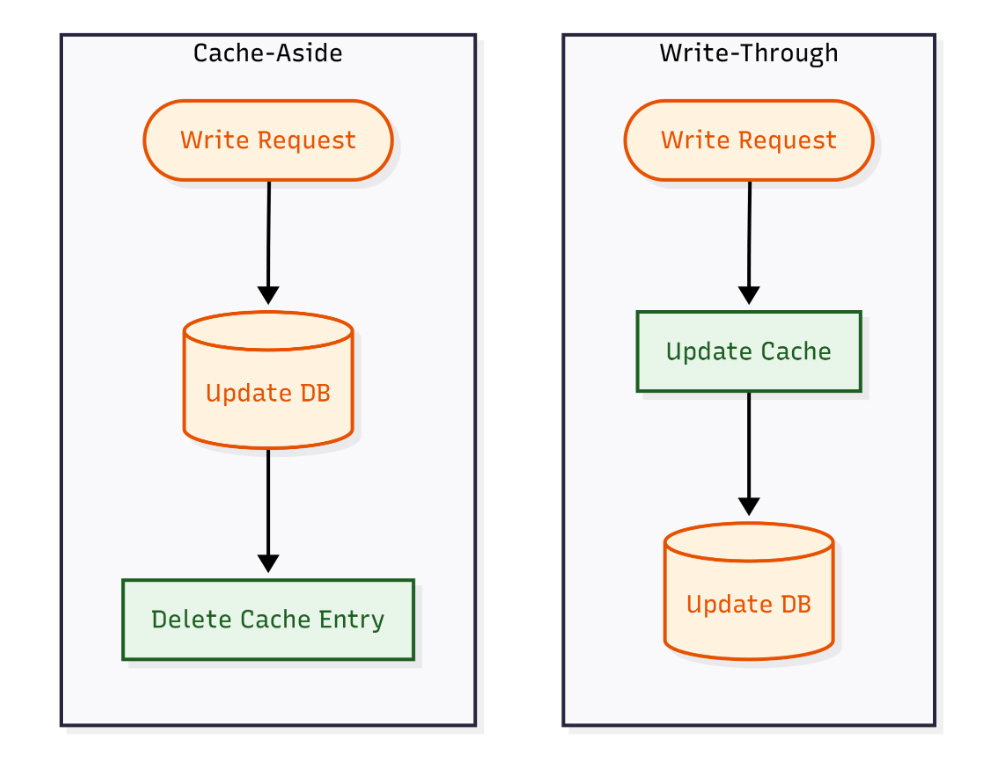
For write operations, the standard workflow dictates that the application updates the database first and subsequently invalidates (deletes) the corresponding cache entry. This invalidation ensures that the next read flow forces a refresh from the database, effectively minimizing the window of time in which stale data is served.
In contrast to the reactive approach, the Write-Through pattern adopts a proactive stance. Here, the cache is treated as the primary data store for write operations. When an update occurs, the application simultaneously updates both the cache and the underlying database in a single atomic operation from the perspective of the data flow.
This approach guarantees that the cache remains strictly synchronized with the database, eliminating the need for manual invalidations and drastically reducing the probability of cache misses once the system has reached a steady state.
Therefore, we agree that the standard process for querying a record follows this flow:
Therefore, we can emphasize that the difference lies in data persistence, as shown below:
Much like the transition from platform threads to Virtual Threads, selecting between these patterns depends on resource constraints and business logic requirements.
The core of the technical dilemma is not determining which pattern is superior, but identifying which best mitigates the operational risks of your domain.
There is no universal winner in distributed system architecture. In modern software engineering, the goal is to move away from over-engineered generic solutions and start choosing strategies based on actual data behavior.
Cache-Aside remains the recommended starting point for most web services due to its flexibility and fault tolerance. Conversely, Write-Through should be reserved for cases where data consistency is a non-negotiable requirement. Just as with Java's Virtual Threads, the key is to let the appropriate pattern handle the heavy lifting, allowing the development team to focus on building features that deliver real value.

